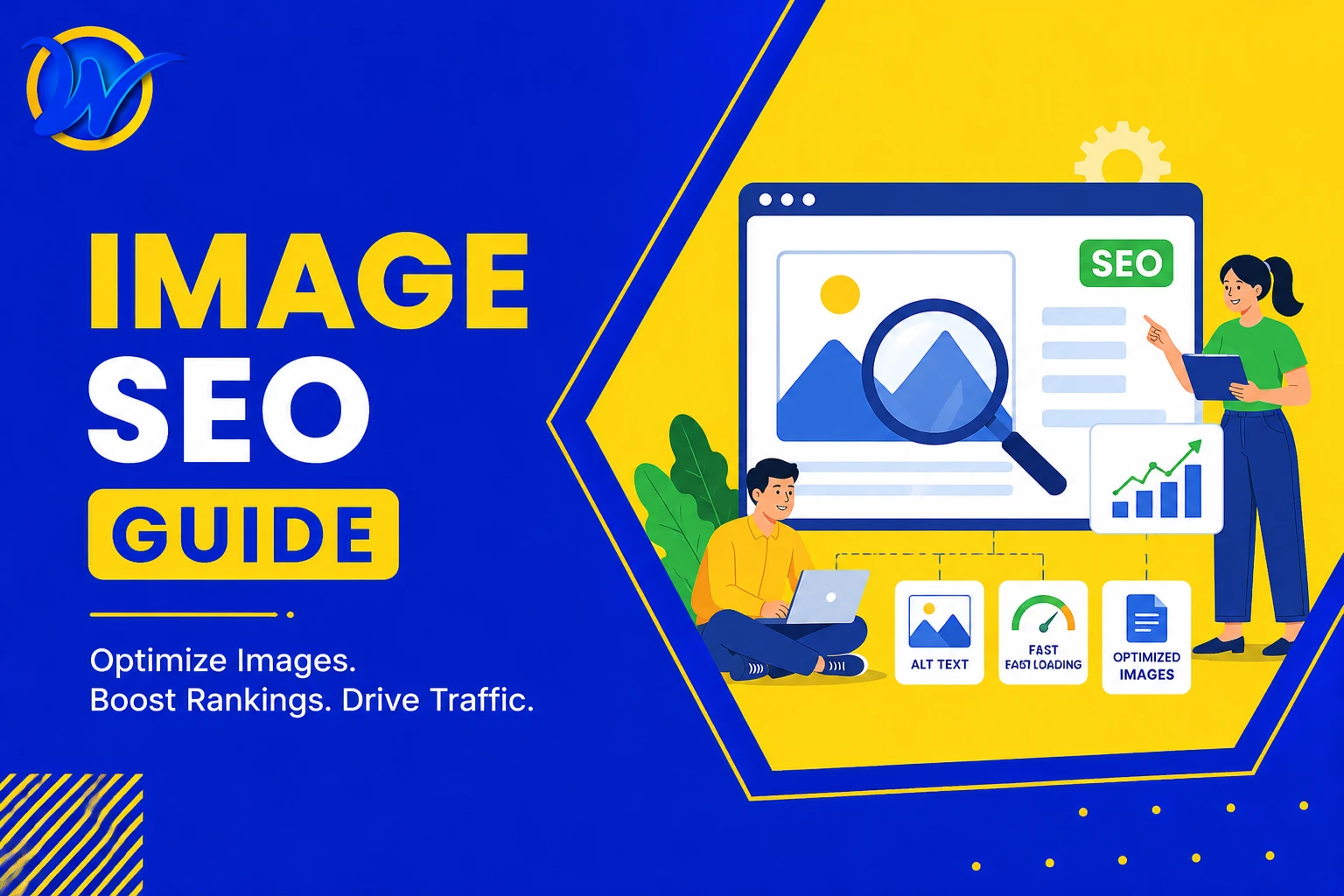
A successful digital marketing strategy involves much more than publishing content and building backlinks. Over the last decade, I’ve seen websites significantly improve their search visibility simply by optimizing their images correctly. Yet image SEO remains one of the most overlooked aspects of search engine optimization.
Today, image optimization is no longer just about helping images rank in Google Images. Search engines and AI-powered search platforms use images, image metadata, page context, and visual relevance to better understand content and determine its value for users.
When done correctly, image SEO can improve page speed, enhance user experience, increase visibility in image search results, and contribute to stronger organic rankings across search engines.
Key Takeaways
- Image SEO helps search engines and AI search platforms understand your content better.
- Descriptive file names provide important context for search engines.
- Modern image formats like WebP and AVIF improve page speed without sacrificing quality.
- Optimized alt text enhances both accessibility and SEO.
- Image compression helps improve Core Web Vitals and user experience.
- Captions and surrounding content strengthen image relevance.
- Image sitemaps help search engines discover and index visual content.
- Mobile-friendly images are essential for Google’s mobile-first indexing.
- Custom graphics and infographics can attract backlinks and improve authority.
What is Image SEO?
Image SEO is the process of optimizing images so search engines and AI search engines can better understand, index, and display them in relevant search results.
Image optimization includes:
- Using descriptive file names
- Writing accurate alt text
- Compressing images for faster loading
- Choosing modern image formats
- Adding image structured data when appropriate
- Creating image sitemaps
- Improving image accessibility
The goal is to make images discoverable, relevant, and useful while supporting the overall topic of a page.
Why Image SEO Matters in 2026?
Modern search engines rely heavily on visual content to understand web pages. AI search platforms also analyze images alongside text when generating answers.
Effective image SEO can help:
- Increase organic traffic from image search
- Improve page experience and Core Web Vitals
- Enhance accessibility for all users
- Support topical relevance and entity recognition
- Improve visibility in AI-generated search results
- Increase engagement and time spent on page
Simply put, optimized images help both users and search engines understand your content more effectively.
Image SEO Techniques for Search Engines and AI Search
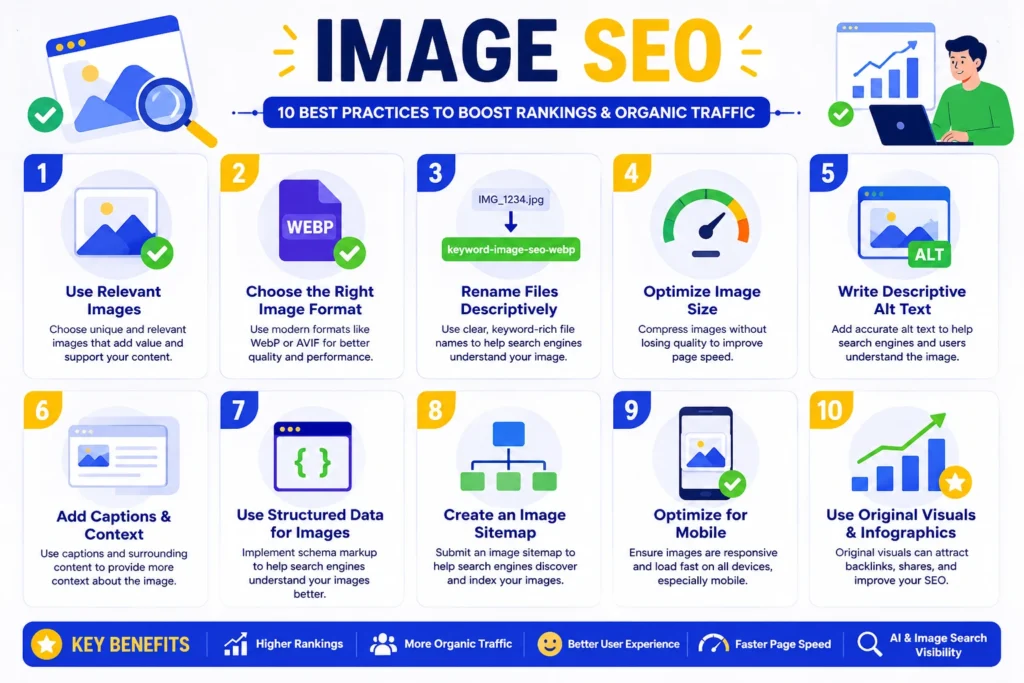
1. Use Unique and Relevant Images
One of the biggest mistakes website owners make is relying entirely on generic stock photos.
Users often notice images before reading any text. Unique visuals help establish trust, improve engagement, and make your content more memorable.
Whenever possible:
- Create original screenshots
- Use custom graphics and infographics
- Capture your own photographs
- Design branded visuals
Search engines increasingly reward pages that provide unique value, and original images can contribute to that differentiation.
Best Practice
Ensure every image directly supports the content section where it appears. Images should add context rather than serve as decorative elements.
2. Prioritize High-Quality Images
Image quality has a direct impact on user experience.
Blurry or low-resolution images can reduce trust and negatively affect engagement. At the same time, extremely large files can slow down your website.
The ideal approach is to use high-quality images that are properly optimized for web performance.
Recommended Formats
- WebP for most website images
- AVIF for maximum compression and quality
- PNG for graphics requiring transparency
- JPEG for photographs when WebP is unavailable
- SVG for logos and vector graphics
Modern formats like WebP and AVIF often deliver significantly smaller file sizes without noticeable quality loss.
3. Rename Images with Descriptive File Names
Search engines cannot fully understand an image unless you provide contextual signals.
One of the simplest optimization techniques is using descriptive file names.
Poor Example
img00458.jpg
Better Example
image-seo-best-practices.jpg
Best Example
image-seo-optimization-for-organic-traffic.webp
Use clear, keyword-rich descriptions that accurately represent the image without keyword stuffing.
4. Optimize Image Size for Faster Loading
Page speed remains a critical ranking factor and user experience signal.
Large image files are often responsible for slow-loading websites.
To improve performance:
- Compress images before uploading
- Use responsive image dimensions
- Implement lazy loading
- Serve next-generation formats
- Avoid uploading oversized images
A faster website can reduce bounce rates and improve both user satisfaction and search visibility.
Recommended Compression Tools
- TinyPNG
- Squoosh
- ShortPixel
- Imagify
- ImageOptim
5. Write Descriptive Alt Text
Alt text helps search engines and screen readers understand image content.
Many website owners either ignore alt text or fill it with keywords. Both approaches are ineffective.
Good alt text should describe what appears in the image while naturally incorporating relevant keywords when appropriate.
Poor Alt Text
seo image seo image optimization
Better Alt Text
Digital marketer performing keyword research for an image SEO campaign
Well-written alt text improves:
- Accessibility
- Search engine understanding
- Image search visibility
- AI search comprehension
6. Add Relevant Captions and Surrounding Context
Search engines evaluate more than just the image itself.
They also analyze:
- Nearby text
- Captions
- Headings
- Page topic
- Structured data
Images placed within highly relevant content are more likely to rank than images placed without context.
A useful caption can increase user engagement while helping search engines better understand image relevance.
7. Implement Structured Data for Images
Structured data provides additional information about images and content.
Depending on your content type, consider implementing schema markup such as:
- Article Schema
- ImageObject Schema
- Product Schema
- Recipe Schema
- FAQ Schema
Structured data can improve how content appears in search results and help AI systems better interpret page information.
8. Create and Submit an Image Sitemap
An image sitemap helps search engines discover image assets that may otherwise be missed during crawling.
This is particularly important for:
- Large websites
- E-commerce stores
- Photography websites
- Image-heavy blogs
An image sitemap provides additional details about image locations and can improve indexing efficiency.
Although it does not guarantee rankings, it increases the chances of images being discovered and included in search results.
9. Optimize Images for Mobile Devices
Google primarily uses mobile-first indexing, meaning mobile performance is critical.
Your images should:
- Scale properly across devices
- Load quickly on mobile networks
- Maintain quality on high-resolution screens
- Avoid layout shifts
Responsive images help create a better experience for both users and search engines.
10. Use Original Infographics and Visual Assets
Custom infographics remain one of the most effective image SEO assets.
Well-designed visuals can:
- Earn backlinks naturally
- Increase social shares
- Improve user engagement
- Support entity recognition
- Enhance AI search visibility
Creating unique visual content gives your website assets that competitors cannot easily replicate.
Images can Drive More Visitors to your Website
Image SEO is no longer limited to Google Images rankings. Modern image optimization helps search engines, AI assistants, and users understand your content more effectively.
To improve image SEO:
- Use unique and relevant images
- Choose modern image formats like WebP
- Rename image files descriptively
- Compress images for faster loading
- Write meaningful alt text
- Add captions and contextual content
- Implement structured data
- Create image sitemaps
- Optimize for mobile devices
- Use original visual assets whenever possible
By treating images as an essential part of your SEO strategy rather than an afterthought, you can improve organic visibility, user experience, and AI search performance.
Frequently Asked Questions
Does image SEO help Google rankings?
Yes. While images alone do not guarantee higher rankings, optimized images improve page speed, user experience, accessibility, and content relevance, all of which contribute to SEO performance.
What is the best image format for SEO?
WebP is generally the best choice because it provides high-quality images with smaller file sizes. AVIF can offer even better compression in many cases.
Is alt text still important for SEO?
Absolutely. Alt text helps search engines and screen readers understand image content, making it valuable for both accessibility and search visibility.
Should every image contain a keyword in the alt text?
No. Alt text should accurately describe the image. Only include keywords when they fit naturally and reflect the image content.
Do AI search engines use images?
Yes. AI-powered search engines increasingly analyze images, captions, metadata, and surrounding content to understand webpages and generate more accurate responses.